Electric Locomotive Roster: The WAP Series!

The first electric locomotives in India were dedicated goods (WDG) and passenger (WCP) DC traction locomotives introduced by the British before independence. When Indian Railways decided to fully switch to AC traction post-independence, it did away with specialized locomotives for passenger operations and handed passenger duties to “mixed” WAM locos. This was probably because IR wanted to focus on freight services rather than passenger, and speed was never a focus area of the Indian Railways until the late 1990s anyway. But this arrangement wouldn’t last long. With all the focus on freight, the WAG series was getting more and more sophisticated, starting with the introduction of the WAG4 in 1963. In 1978 the WAG5 was introduced, and took the Indian Railways by storm. It was then clear that the stellar WAM4s, which rewrote Indian electric traction history, would have to be completely removed from freight duties as they were inefficient compared to WAG5s. At the same time, the electrification of the Howrah-Delhi line was nearing completion and we needed a dedicated AC electric locomotive to replace the WDM4 as the power of the then King of Indian Railways, for which WAM4 didn’t exactly fit the bill either. Thus arose the idea for a high-speed AC electric traction passenger locomotive to be dedicated for passenger duties. Thus arose the WAP series. Interestingly, a dedicated diesel passenger locomotive also wouldn’t exist until 1994.
Click on the locomotive class name to directly jump to its section.
WAP1 | WAP2 | WAP3 | WAP4 | WAP5 | WAP6 | WAP7
Out of these, the WAP series has four of its members currently in operation: the WAP1, WAP4, WAP5, and WAP7 and only one (WAP7) in production. It is also the most visible of all Indian Railways locomotives because they are the most exposed to the public. They are hence the face of the railways and have become the yardsticks by which the power and performance of Indian Railways is measured. Here are the reigning superstars of Indian Railways!
WAP 1
- First dedicated passenger service electric locos
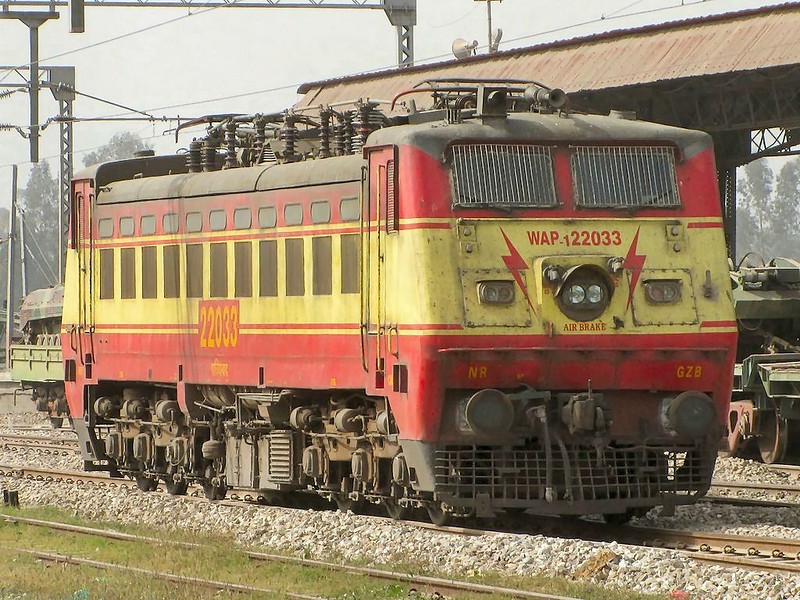
- Regeared version of the WAM4 with new looks
- Period of production: 1980 – 1996
- Number produced: 77
- Power Output: 3900 hp
- Top Speed: 120 kph
- Control: Tap-Changer
- Wheel Arrangement: Co-Co
- Wt: 112t; TE: 22.4t; AL: 18.8t
The WAP1 was India’s first dedicated electric passenger service locomotive. It was also the first one to not look like a 1950s French locomotive, featuring revolutionary new looks. The twin-cab design was upgraded to sport aerodynamic tapered ends with a larger, much more solid looking shell, all mighty, muscular and brawny with sharp edges and a super-aggressive stance, a first in India and a sea change from the until then WAM1-inspired boxy designs. However, despite the new exteriors, underneath it remained only the same old WAM4 as in essence, the WAP1 was only a regeared version of the WAM4, geared at 58:21 instead of 62:15 that was originally even classified as WAM4R. Interestingly, WAM4-6P (passenger) variants were also geared at 62:15! However, it was different from a WAM4 on many counts and was a lot more “made in India” than any other locomotive. Since the intention of its creation was speed rather than pulling power, the WAP1 wasn’t given the WAM4’s ALCO asymmetric trimount bogies but was fitted with Flexicoil cast steel bogies, completely designed and developed in India, with twin springs and bolster support, and also had different specifications for transformers and rectifiers. However, it still had the same six Alstom TAO 659 traction motors of the WAM4. It was deemed that those would be enough, but that was not so.
A single WAP1 was enough to haul up to 19 coaches, though that would prove not good enough because it still produced only 50 hp more than the WAM4 and had a very low starting tractive effort of only 22.4 tons. This made them exceptional for hauling short rakes, but our express trains started to get longer and longer, making them not still not good enough for our growing needs. Also, they could not handle gradients without the help of bankers. All this resulted in performance problems and they ending up underpowered in the long run.
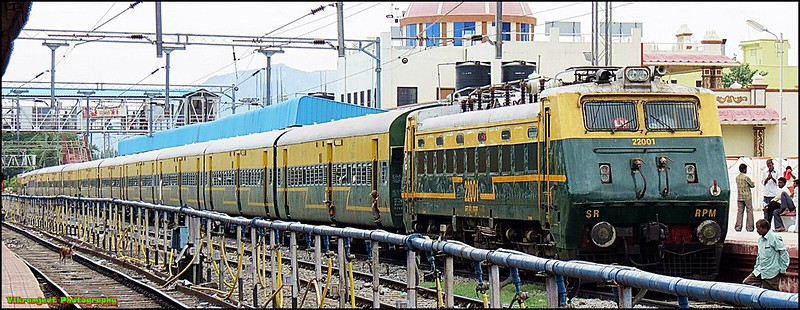
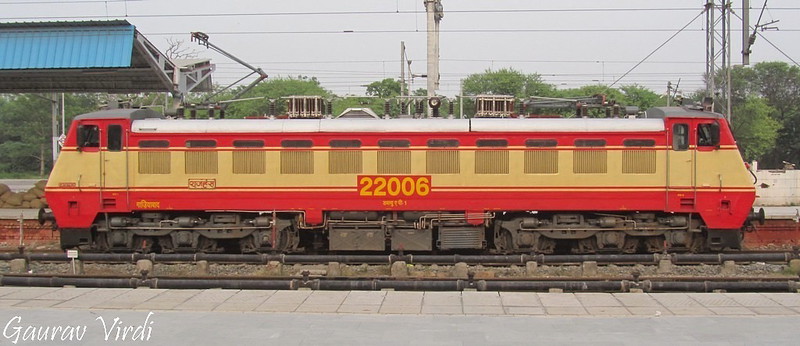
WAP1s were first developed to be dedicated links to prestigious trains like the Howrah Rajdhani and various Shatabdis. #22000 to #22004 were meant exclusively for the Howrah Rajdhani and were painted in orange-yellow-orange Rajdhani livery while #22005 to #22009 were meant to be for various Shatabdis (including #22008, the once-dedicated link for the Taj Express), and were painted in blue and cream Shatabdi livery. #22048, #22049 and #22052, the inaugural link of the Chennai – Bangalore – Mysore Shatabdi, also once sported the now-extinct Shatabdi livery. But these arrangements (and liveries) were to be short-lived. #22005 “Jawahar” is probably the most iconic WAP1, apparently, the inaugural link of the Bhopal (then Jhansi) “King” Shatabdi and later the first WAP3. After being converted back to WAP1 it was then again made famous for its green-yellow Sapthagiri livery. #22001 is another Sapthgiri WAP1. Then we have “beauty queen” #22021 with her white livery. Earlier all sported the old orange-cream-orange Rajdhani livery while today many have a dark orange-dark blue livery with a yellow band, while the later ones are painted in full-WAP4 livery.
The WAP1 was the first attempt by IR at developing a high-speed passenger locomotive and it’s 120 kph top speed was actually a big deal back then. Still, IR was not satisfied and wanted more power and speed, resulting in many experiments on it, which after the failed WAP3 would result in the hugely successful WAP4. In the process, six WAP1s have ended up as WAP4s. The last WAP1 produced was #22076 “Aastha”, rolled out in 1996. Today all are homed at either Ghaziabad/NR or Arakkonam/SR. These granddaddies have been in service for the past 25 years now, and all of them are still going strong and are exceptional performers as well!
WAP 2
As it was with the ALCOs, Indian Railways started its famed experiments at rebuilding successful locomotive classes to extract more out of them for the WAP series as well. However, in this case, it wasn’t the WAP1 that was tinkered to be converted to the WAP2 but as the lore goes, four WAM2s of the Asansol shed were the victims! They were re-geared, their Bo-Bo bogies and WN geared drives replaced by the WAP1 Co-Co Flexicoil fabricated bogies and axle hung traction motors respectively, and were put in WAP1 shells. These ran for quite some time and even hauled the Howrah Rajdhani for some time but were all scrapped in the late 1980s. Nobody knows which ones they were and not even a photo of them survives.
WAP 3
The WAP3 was a slightly faster WAP1 fitted with advanced versions (Mark II, Mark IV) of those fabricated Flexicoil bogies in an attempt to solve the WAP1’s performance problems. It looks like they were only an experiment and not really meant to be a separate class of their own, as early WAP3s were classified “WAP1 Mark II” (as written on the locos). Probably it was only after Mark IV bogies were fitted on them were they classified as WAP3. WAP1 #22005 “Jawahar” was the first to be converted to WAP3 and #22003 and #22006 to #22009 followed soon. Despite all this, they could not find enough torque to manage gradients without bankers or enough power to haul long express trains and they all were soon reverted back to WAP1 class. After this, IR realized that the problem didn’t lie with the bogies but with the traction motors.
WAP 4
- IR’s most common passenger loco
- WAP1s with more powerful motors
- Production Period: 1994-2015
- Number Produced: 776
- Wheel Arrangement: Co-Co
- Top Speed: 140 kph
- Top Rated Power: 5350 hp
- Wt: 112t; TE: 30.8t AL: 18.8t
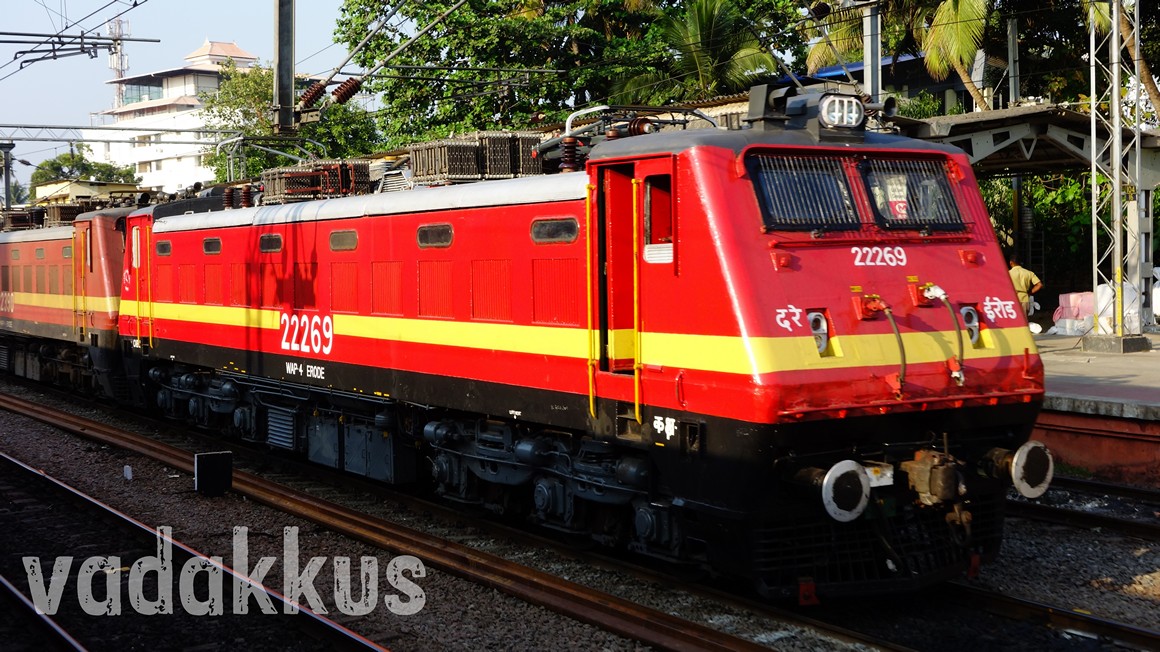
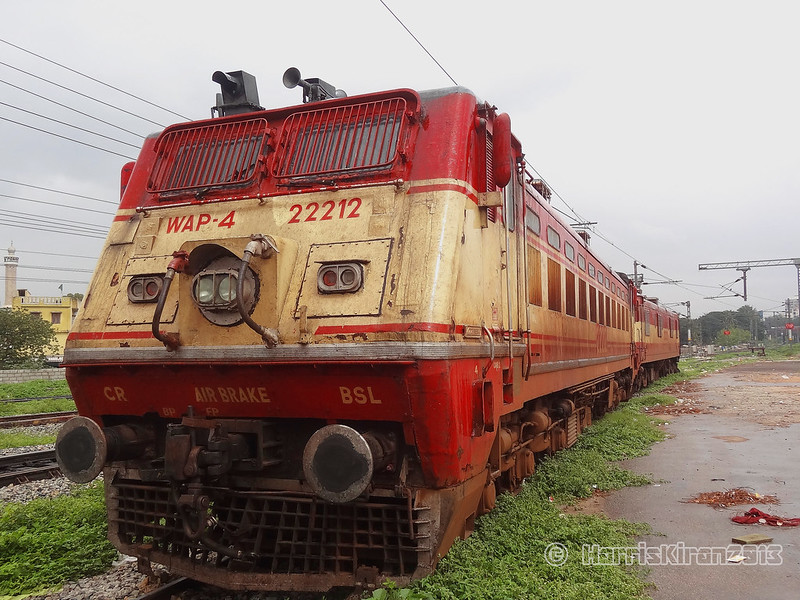
These brick-red beauties emerged out of the WAP1 with 60% more power and rock-solid reliability, making them the ubiquitous face of Indian Railways’ passenger services over the next two decades and at least one more to come. With the WAP4, Indian Railways’ search for a high-powered locomotive capable of hauling 24 or even 26 coaches at speeds up to 140 kph, one that could tackle gradients without the help of bankers finally found fruit. IR/RDSO had realized that the reason for the WAP1’s performance problems were those low-powered 770 hp Alstom TAO 859 traction motors. They had previously caused a revolution with their successful adaptation for the WAM4 and WAG5 but were now too underpowered for modern requirements. At that time, new 840 hp Hitachi 15250 traction motors had been adopted for use on newer WAG5s. So, these traction motors were adopted on to WAP1s Flexicoil Mark I fabricated bogies, and with a new indigenously designed 5400 kVA transformer and silicon rectifiers resulted in the birth of the WAP4 class. It also was among the first locomotives to get a microprocessor-based control and fault diagnostics system. To accommodate the heavier Hitachi motors without increasing its 112t overall weight, the WAP4 was made substantially lighter by the widespread use of aluminum materials in construction. The underframe of WAP4 is narrower and lighter and also completely different from that of the WAP1 to enable it to handle higher loads. Though overshadowed by its more glamorous 3-phase cousins, the WAP4 can match a WAP5 or sometimes even a WAP7 as a heavily rugged, very powerful, high-speed and super-reliable contender that is the pride of the fleet!

The first WAP4s were rolled out in WAP1 shells and looked exactly like them, including their orange-yellow-orange liveries. Later, the WAP1-inspired muscular features gave way to more feminine looks, as many WAP5 design cues (like the large windows) were adopted for it, making it sleeker and lower with a lot of graceful-looking curves. All WAP4s are painted in the same red-black with a yellow/cream band livery, though the shade of the red will differ from shed to shed, from the blazing crimson red of Santragachi SRC/ER to the orange of Erode ED/SR. WAP4s were developed at the same time IR gave procurement orders for WAP5 locomotives, as they were meant for more “general” duties of hauling 24-coach expresses while WAP5 were specially meant for high-speed operations. The first WAP4, #22201 rolled out on April 25, 1994, and the last one, #25051 on November 1, 2015, making 776 of these workhorses produced over 20 years, the driving force of Indian Railways’ passenger business, hauling everything from departmental trains and lowly passengers to Rajdhanis and Durontos. Its reliability, ability to maintain constant high speeds and wide servicing network across the country make the WAP4 ideal for most long distance express trains that run across the country. It is the regular link for many a prestigious superfast service and holds the records for most number of longest-distance runs.
However, in the face of the advent of three-phase AC traction motors, IGBT-controlled AC drives, and full computer control its technology of DC traction motors was getting outdated and after being in production for more than 30 years, its time had to end. When the last WAP4 CLW, it marked the end of an era, a glorious chapter of the Indian Railways as the sun finally set on “conventional” locomotive production as we bid goodbye to DC traction motor technology. However, many of these beauties will be with us for many more years.
WAP 5
- The Fastest Indian (Locomotive)!
- Made by ABB in Switzerland, now being produced at CLW under ToT agreement
- Production Period: 1995+
- Number Produced: 87+
- Wheel Arrangement: Bo-Bo
- Top Rated Power: 6000 hp
- Top Speed: 200 kph
- Wt: 79t; TE: 26.3t; AL: 19.5t
After many years of tinkering and remaking 1950s French locomotives, Indian Railways realized that it was time for a “really” new and modern high-speed locomotive to haul Rajdhani and Shatabdi trains at speeds more than 120 kph. The years from 1992 to 1995 were a period of unsung modernization for Indian Railways when they finally decided to upgrade our trains with better locos and rakes. On July 1993 a tender was called to supply 11 high-speed passenger and 22 high-horsepower freight locos, the first time such a tender was called since the induction of the WDM2 in 1962. The tender for LHB coaches was also called for at around the same time. The contract was won by Adtranz/ABB of Switzerland. The body shells were made at the ABB plant at Dandenong, Australia, and the electricals assembled at the ABB Tramont works at Zurich-Oerlikon, Switzerland. The WAP5 was an Indian version of ABB’s super-successful, highly acclaimed (and stunning) Lok 2000 (Re-460), though their similarities are limited to some of the electricals. The first 11 WAP5s (#30000-#30010) were assembled at Zurich along with the WAG9s and delivered to India by ship, arriving at Calcutta in July 1995, marking the beginning of the “real” modern era of the Indian Railways. The WAP5s were the first to feature 3-phase AC (asynchronous) traction motors (all those before up to the WAP4 were DC), GTO Thyristors (in place of tap changers), regenerative braking, HEP, disc brakes and what not. Here are some first-hand pictures of the manufacturing and delivery processes!

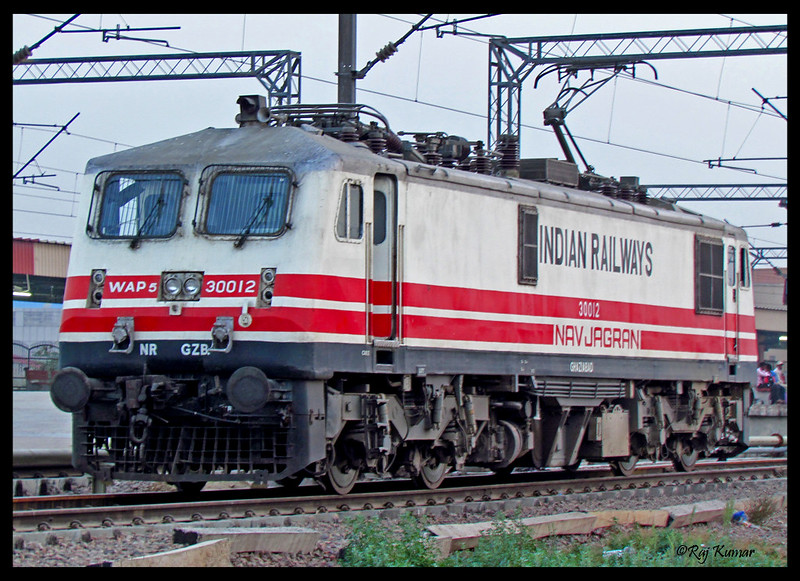
The WAP5 is the fastest Indian. It is the pint-sized powerhouse of Indian Railways, the superstar among its locomotives and the Indian speed record holder that regularly hauls three out of the five fastest trains in India: The Gatimaan Express (1), the Kanpur Shatabdi (3) and the Bhopal Shatabdi (5) (the Mumbai Rajdhani (2) and the Sealdah Duronto (5) are the other two) and obviously has the biggest number of starry-eyed admirers. Just five years after the original 11 WAP5s reached Indian shores, CLW rolled out the first fully Indian-built WAP5, #30011 “Navodit”, a carbon copy of the Swiss WAP5s. Since then, 87 of these white beauties have been rolled out, and all are homed at either Ghaziabad GZB/NR or Vadodara BRC/WR, heading some of India’s most prestigious trains. WAP5s are meant to haul shorter and lighter trains at high speeds for shorter distances over flatter terrains, making them ideal for intercity trains like Shatabdis and some Rajdhanis or Durontos. The WAP5 was designed for speeds upto 200 kph, has done 184 kph and allowed commercial speeds of up to 160 kph with the Gatimaan Express (fastest train in India) and regularly hits 130-150 kph with other superfast trains.
Fun Fact: The livery of the WAP5 is based on the Re-460’s first advertisement livery, for Agfa Film.

WAP 6
- Experiment to create a faster WAP4
- All have been converted to WAP4 now
- Production Period: 1997
- Number Produced: 17
- Top Speed: 105 kph
- Top Rated Power: 5350 hp
- Wheel Arrangement: Co-Co
- Wt: 113t TE: 30.8t AL: 18.8t
The WAP6 was yet another attempt at trying to coax more speed out of the WAM4-inspired-WAP1-inspired WAP4. This was, in essence, the same WAP3 experiment but on a larger scale and on WAP4s instead of WAP1s. Mainly, the Flexicoil Mark I bogies of WAP4s were replaced with newly developed Flexicoil Mark 4 high-adhesion bogies. #22212 was the first WAP6, a converted WAP4. IR seemed to be pretty serious about this class as they were supposed to be designed to run at 160 kph. It was even given its own road number series starting 22401. But they repeatedly failed trails and were certified for only 105 kph maximum speed ending up another failed experiment among many by RDSO, CLW, and IR to squeeze out more speed and power from existing locomotives. All WAP6s were in time converted back to WAP4, bogies and all, and IR finally gave up tinkering experiments and focused on improving existing designs only, or on purchasing brand new locomotives.
WAP 7
- Most powerful Indian passenger locomotive
- Re-geared version of the WAG9
- Production Period: 1997+
- Total Number Produced: 292+
- Wheel Arrangement: Co-Co
- Top Rated Power: 6350 hp
- Top Speed: 140 kph
- Wt: 123t; TE: 36t; AL: 20.5t
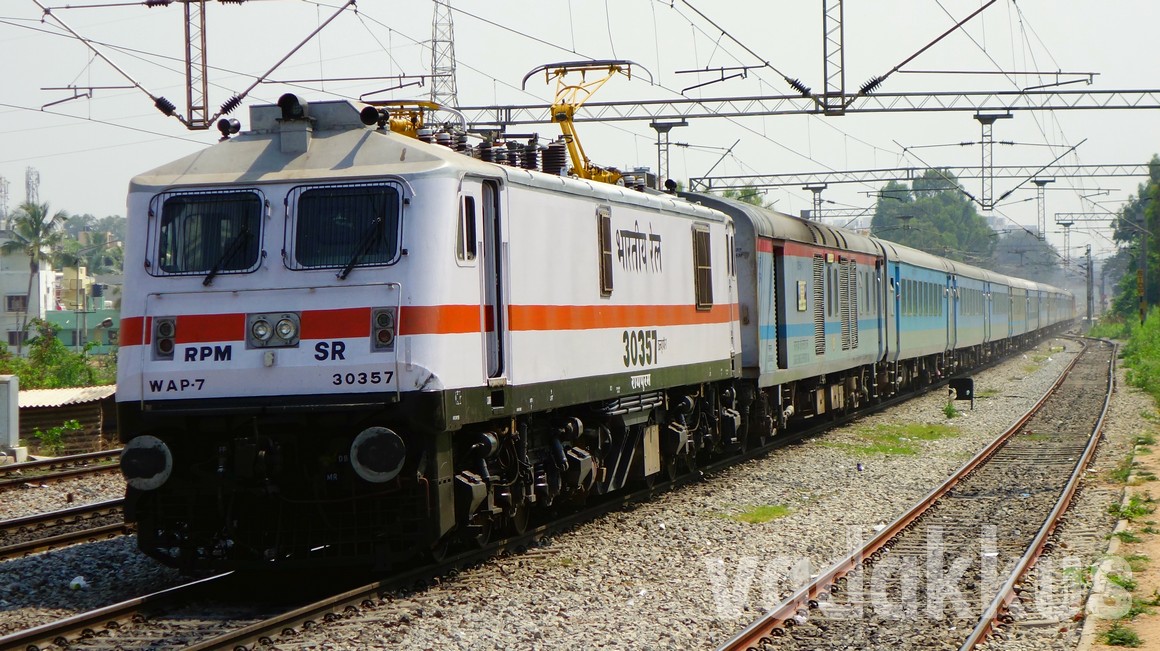
The WAP7 is the current reigning king of the Indian Railways. These milky white monsters, called “Milkybars” by some railfans, along with their twin brothers the WAG9s are the most powerful locomotives in India today. They are the prestigious links for almost all Rajdhanis and Durontos including the “kings” (Sealdah Duronto and Mumbai Rajdhani) and many high-speed Superfasts, hauling them across the country at 130-140 kph continuous runs without breaking a sweat. They are synonymous with power and speed and are the perfect answer to IR’s need for a locomotive that balanced speed and power where the WAP5 could not go and to eventually replace the WAP4. The high acceleration capacities of these locos make them the favorites for heavy expresses that need to stop every now and then, which is why the Grand Trunk Express is hauled by a WAP7 while the Tamil Nadu Express is hauled by a WAP4. The WAP7 was the result of IR realizing there was a gap in its lineup, which was a modern 3-phase high-power, high-speed passenger locomotive.
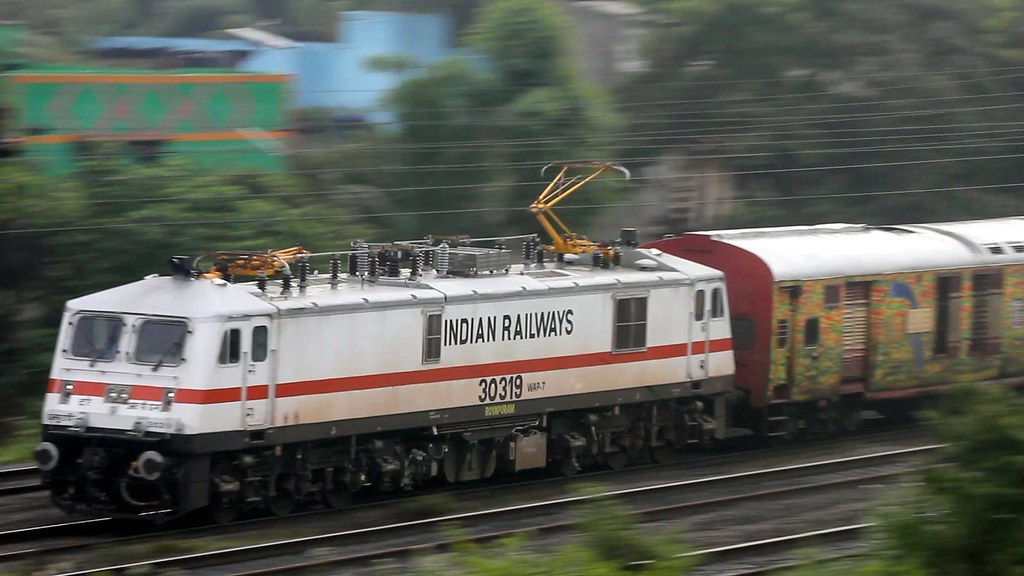
The WAP7 didn’t have an independent origin but was born out of the WAG9. After Indian Railways received the WAG9s from ABB, someone had the brainwave of re-gearing them to create an equally powerful high-speed passenger locomotive to fill the above-mentioned gap. And so was born the WAP7 with a 72:10 gear ratio enabling them higher speeds at the cost of lower tractive effort, compensated by their larger weight, unchanged as the WAG9. All other advanced features of the WAG9 were carried over to the WAP7 without any changes. This creation of the WAP7 was IR/RDSO/CLW doing what they had been doing ever since the beginning of Indian Railways: re-working existing locomotives to create better ones. They re-geared the WAM4 to create the WAP1 and then the WAP4, but they were rectifier locomotives with DC traction motors, workings of which IR was very familiar with. Re-gearing a 3-phase locomotive to create a new class was something else.
The first WAP7, #30201 “Navkiran” rolled out of CLW on May 5, 2000, and they have been in production ever since with 320+ of them produced so far and a lot more to come. Just like the WAG9s, the original WAP7 design was changed to include Isolated Gate Bipolar Transistors (IGBTs) controlling power flow to the traction motors instead of GTO Thyristors as per the original specs from the Swiss for increased efficiency and cooler operation. These locomotives were named WAP7i, the ‘i’ standing for “IGBT”. 30313/LGD was the first WAP7i and since 30425/LGD, all WAP7s produced are WAP7is, most if which feature inbuilt Hotel Load or Head-End Power (HEP) generation that eliminates the need for power cars. Some WAP7s are rumored to have in-cab signaling and all newer ones currently in production have air conditioned cabins. Other than these, WAP7s have not undergone any major modifications to their structure and have remained largely unchanged throughout their production period. Around 100 new Being the most powerful passenger locomotive in India, WAP7s have possibly the largest and most vocal fans base who swear by its mighty majestic stance and incredible power.
WAP5 vs WAP7
[ws_table id=”41″]
Every major field has a binary rivalry, and among Indian Rail fans, the biggest must be the contest between WAP5 and WAP7 fans on the topic of “which is better?” But how much ever you try, there is no clear winner. The WAP5 packs 94% of the WAP7s power into a body that is 37% lighter and 2.5 meters shorter, but because of its lower weight and tractive effort and 8 wheels, is limited to hauling shorter and lighter trains on flat terrains (reason why there are no WAP5s in the south and east), while the WAP7 can haul almost anything through any section thanks to their higher power, weight, tractive effort and axle load and 12 wheels but runs out of steam at 140 kph, while the WAP5 can go even up to 200 kph with some modifications! However, the WAP7 has higher acceleration power than the WAP5, thanks to extra wheels. Like I said, no clear winner! My favorite? The WAP4.
The Indian Railways Locomotive Formula
If you look at the story of all Indian Railways locomotives, diesel or electric, one thing becomes clear. We are unlike any market in the world, and nowhere is this more evident than in our railways. We imported all our first locomotives from Europe but quickly realized that formulaic methods that work there will not work here. The formula for freight locomotives all over the world seems to be low weight, high tractive effort, and high axle loading on mainly standard gauge. However, in India, we have learned that high TE without high locomotive weight is useless, In the same way, all over the world, train makers try to reduce the number of axles and wheels to keep friction and weight to a minimum, which will enable high speeds. In India however, any experiments to increase speeds or haulage with Bo-Bo wheel arrangements have met with repeated failure. Sure, the WAP5 has been highly successful but is limited to flat, straight terrain and not on gradients and curves.

What always was successful, however, was the Co-Co wheel arrangement for both freight and passenger: two bogies with three axles (six wheels) each, all axles powered by individual traction motors. This is also the Indian locomotive success formula! This is because, simply, Indian transportation needs are always about capacity, capacity, capacity. Nowhere else in the world do trains have 24 coaches and are half a kilometer long and weigh a thousand tons and travel over such widely varying terrain facing all kinds of weather. What our trains hence need first and foremost is the most haulage power and have to be extremely rugged and easy to service and operate. The more wheels, the merrier, because this gives more weight and traction, translating to greater stability on our Broad Gauge tracks. In 1962, ALCO correctly gauged this requirement and introduced the WDM2 with its legendary trimount Co-Co bogies, which have been the mainstay of every successful locomotive class including all ALCOs and the WAM4, WAG4, WAG5, and WCAMs. Later successes like WAP1, WAP4, WAG7 had their own fabricated Co-Co bogies, completely made in India. Fixing higher powered traction motors has allowed WAP4s to reach top speeds as much as the WAP7.
So, that’s all, folks! Currently, Indian Railways has only AC traction locomotives with 3-phase AC asynchronous traction motors (drives), in production in its electric portfolio, the WAG9, WAP5, and WAP7. There are plans for procurement of more powerful electric freight locomotives, but not passenger locomotives, as they seem to be focusing on the EMU model for now. It remains to be seen if there will ever be a WAP8. Thank you for reading!
More Chapters on Indian Locomotives
Locomotives of the Indian Railways | Locomotives Terminologies and Design
How Locomotives are Classified | How Electric and Diesel Locomotives Work
DIESELS: The WDM Series (ALCOs) | The WDP and WDG Series (ALCOs and EMDs)
ELECTRICS: DC and AC/DC Locos | The WAM Series (AC mixed) | The WAG Series (AC Freight)